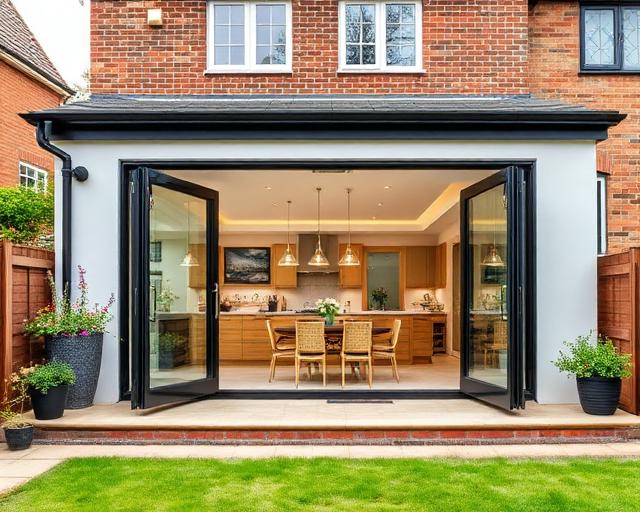
Render Repair in Kent
Cracked or hollow render is rarely just a cosmetic problem. Water gets behind the surface, frost blows it further off the wall, and what started as a hairline crack becomes a damp patch on the inside of the bedroom. Mighty Oak Construction repairs render across Kent from its Tunbridge Wells base, and every repair starts with the same question: why did it fail? A free visit diagnoses the cause before any patch is specified, followed by an itemised written quote.
Diagnose before you patch
Render fails for reasons, and the repair has to address the reason. Cracks that follow the line of a lintel or a junction between old and new brickwork are movement cracks. Hollow, drummy patches that sound empty when tapped have lost their bond to the wall. Cratering and spalling low down often point to splashback or a bridged damp proof course.
A patch applied over render that is still moving, or still wet behind, simply fails again. The free visit establishes which mechanism is at work, because that decides whether the answer is a local repair, a mesh-reinforced base coat over a wider area, or a full re-render of the elevation.
How a render repair is done
Loose and hollow render is cut back to a firm edge — never feathered over. The exposed wall is checked for damp and salts, prepared and primed, and the new render is built up in coats matched to the existing system. On older solid-wall houses, a breathable repair in a compatible material matters more than a hard cement patch, which can trap moisture in the wall and push the problem sideways.
Colour and texture are matched as closely as the existing finish allows. A repaired patch on a weathered elevation will read as newer for a while; where that matters, a full elevation coat or a decorative finish over the whole wall is quoted as an option.
Cracked render and the wall behind it
Sometimes the render is the symptom rather than the disease. Cracking that mirrors structural movement, lintel failure or wall-tie problems needs the structure addressed first, and the visit will say so honestly where that is the case. Rendering over a moving wall is money spent twice.
What render repair costs depend on
The area involved, the height and access, the render system being matched and the state of the wall beneath all move the price. A small patch at ground level and a full gable at scaffold height are different jobs. The written quote is itemised so the preparation, the render system and any access costs are each visible.
Who does the work
Elliot, founder and third-generation craftsman, is the single point of contact. Rendering and plastering are in-house trades, so the person who diagnoses the failure is the person who specifies and carries out the repair. The firm is fully insured.
Render Repair: questions before commissioning
Can cracked render just be filled?
Hairline surface cracks can sometimes be filled and painted, but cracks caused by movement or a lost bond will reopen. The cause is diagnosed on the free visit before any repair is specified.
How do I know if my render is blown?
Tap it. Render that has lost its bond sounds hollow and drummy compared with the solid note of well-bonded render. Blown areas eventually crack and fall away.
Will a repair match the existing render?
Texture and colour are matched as closely as possible, but new render on a weathered wall reads as newer at first. A full-elevation finish coat is quoted as an option where a uniform appearance matters.
Do you repair render at height?
Yes. Access is planned as part of the quote, whether that is a tower, scaffold or another safe means of access.
Get the crack diagnosed
Send a photograph or book a free visit. The cause is established first, then the repair is specified and quoted in writing.